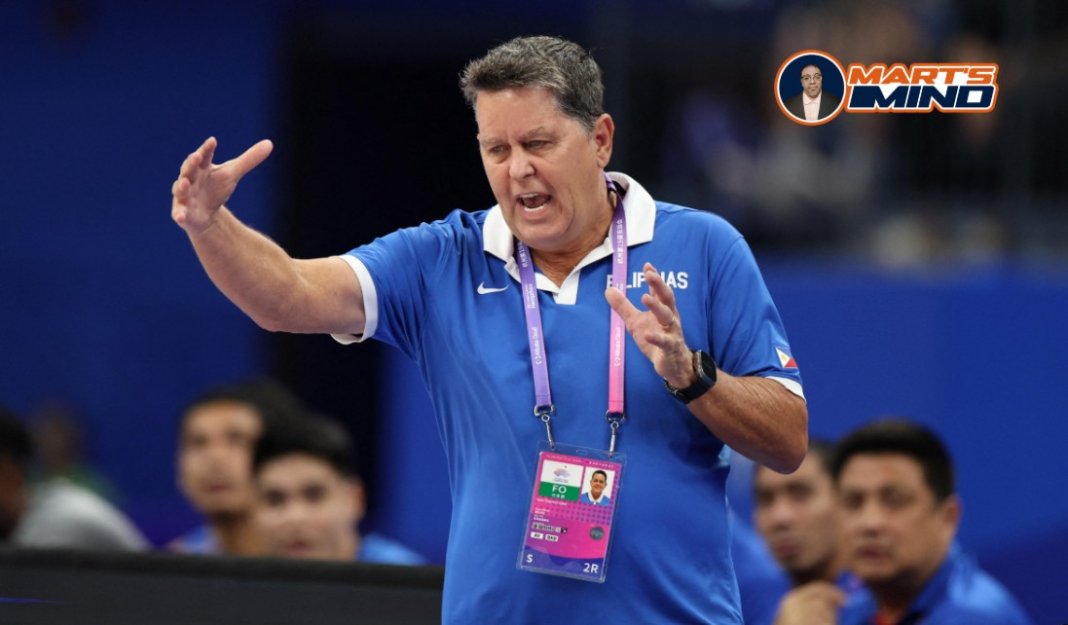

Tim Cone, more than anyone, deserves some leeway. He has earned the benefit of the doubt. His résumé speaks for itself, and his credentials and achievements suggest a man who knows what he is doing. But, on Thursday, at the Senate Committee for Sports organizational meeting, he sounded incredibly defeatist, short-sighted, and out of touch with reality—the very same characterizations that could apply to the PBA, the league he represents.
Cone also sounded like a sour-graping politician fully intent on skirting accountability by passing blame around rather than being the voice of reason and a catalyst of change. Rather than look inward and acknowledge fault for poor preparation and lack of foresight, he instead blamed the KBL and Japan B.League, putting them on blast for supposedly not releasing Filipino players to the Asian Games—as if they are duly bound to cater to the whims of Tim Cone, the PBA, and the Samahang Basketbol ng Pilipinas (SBP). He called for a mechanism of loaning out players, knowing fully well that FIBA already has one.
Tim Cone and Company Know the Rules
Start with that “mechanism” because there already is one. Tim Cone and his cohorts at the PBA and SBP know it and are well versed on exactly how it works. For FIBA-sanctioned competitions—the World Cup, the Asian Qualifiers—clubs are obliged to release their players, and countries that don’t comply risk suspension. Cone said as much himself at the Senate meeting on Thursday.
Now flip it around. The Asian Games is not a FIBA event, and that means the rules of the road were never going to change just because Gilas Pilipinas needed them to. That isn’t a loophole discovered last month. It is the landscape Cone, the PBA, and the SBP have operated in for years—including 2023, when the Philippines also went to the Asian Games without some of its overseas players, and still came home with the gold.
As for the Asian Games themselves? Nagoya was awarded the event in 2016. That’s a decade of notice. Yet Cone and the SBP’s supposed Plan A of using the FIBA World Cup Asian Qualifiers core collapsed, and Plan B was a squad hastily assembled three weeks before the opening ceremony.
That’s not bad luck. That’s bad planning.
Look in the Mirror, Not at the Map
Tim Cone’s own words give the game away. “We can’t bring a secondary team and expect to beat the best of Korea, or the best of China, or the best of Japan,” he said. Fine. Then ask the obvious question: Why is the team built from what’s left at home the secondary one? Does that mean the PBA has lost all the good players abroad, so much so that it cannot compete in Asia?
Cone himself noted that Japan and South Korea were able to field players from their domestic leagues at the Asian Games. That is the whole difference in one sentence. Their leagues are the foundation of their national teams—as the PBA once was and should be with Gilas Pilipinas. But now, Asia’s first and oldest pay-for-play hoops league has now become, by Tim Cone’s own framing, a feeder. “We’re one of the countries that really exports our players,” he said—as if it were a law of nature rather than a verdict.
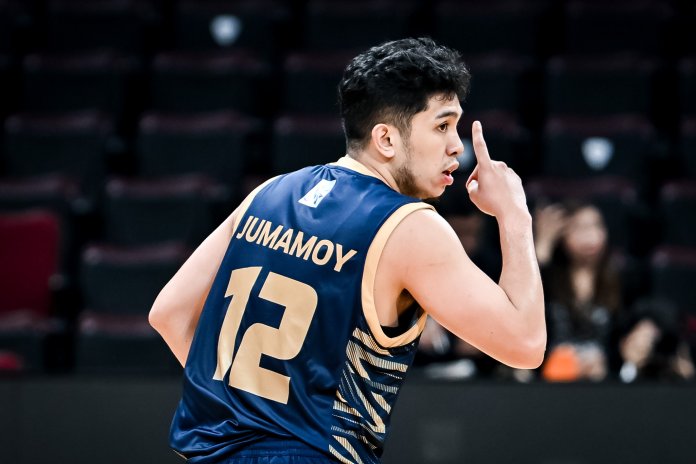
It isn’t. A league that keeps losing its best young talent to overseas competitors is not the victim of those competitors’ success. It is a league that hasn’t given its best a compelling enough reason to stay, or a deep enough pool to survive without them. The goal can’t be a national team that is competitive only if overseas exports like Dwight Ramos, Kevin Quiambao, Carl Tamayo, and AJ Edu are allowed to come home. It has to be a team that holds its own either way, with the exports as a bonus rather than a crutch.
That work happens in the PBA’s backyard. It happens with continuous player development, in raising the quality of competition, and in creating a fool-proof pipeline that decides who is ready to represent the flag when no one else is available. It doesn’t happen at a Senate hearing. It happens in-house, with forward-thinking vision, a sense of purpose, a commitment to change, and a willingness to act—even if it means sacrificing the old ways.
Tim Cone May Have Burned Bridges
There’s a practical problem, too, with Tim Cone putting the KBL and B.League on blast. Standing before lawmakers and casting the KBL and B.League as obstacles is counterintuitive at best. Those leagues owe the Philippines no release for a non-FIBA event. They have rosters, seasons, sponsors, and contracts of their own. They have also been welcoming to Filipino players, handing them opportunities, exposure, and paychecks that have lifted Philippine basketball’s international profile. Put simply, they’ve nurtured the core of Gilas Pilipinas’ “full lineup” as Cone described it—all while providing life-changing livelihood for them and plenty more.
Cone’s own suggestion—that Gilas ask players to push for release clauses in their contracts—is in truth a misguided one and reeks of hubris and privilege. Players would be negotiating against their own employers, from a position of little leverage. Publicly demanding a “mechanism that forces those teams” to hand over their players does the opposite of building goodwill. It risks souring relationships with two leagues that are now key destinations for Filipino talent, and it could make clubs think twice about signing Filipinos who come with strings attached.
Think of it this way: You don’t win a favor by publicly shaming the people you need one from.
Accountability Is the Only Plan That Works
To be fair, Tim Cone is right about one thing. With a full lineup, Gilas Pilipinas can compete. It proved as much by toppling Latvia and New Zealand in 2024. But the Asian Games ended with a 105-61 loss to China and a ninth-place finish—the worst by a defending champion in Asiad history. Pointing overseas won’t fix that. Blaming whoever and whatever won’t make things right.
Indeed, Tim Cone has earned some leeway and the benefit of the doubt. It doesn’t mean he has earned a pass, too. That applies to the SBP and PBA as well.
As a final point, Tim Cone and company need to remember that change doesn’t start with playing the victim and blaming the neighbors. It starts with taking responsibility, then rolling up your sleeves and fixing your own backyard—and then making it so much better that it won’t matter if overseas leagues release our exports or not.