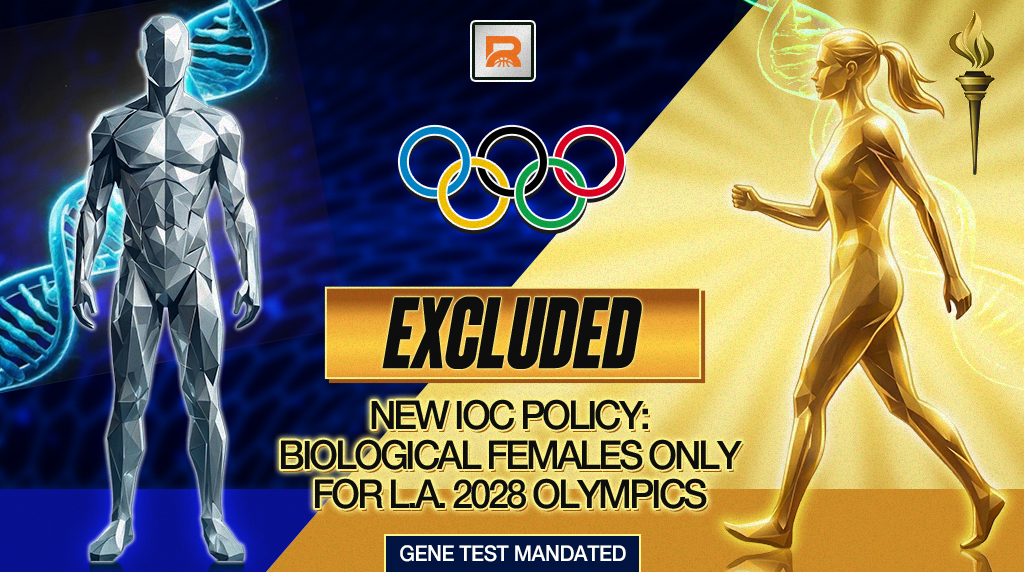

The Olympic movement has drawn a hard line ahead of the 2028 Los Angeles Games by formally barring transgender women from competing in women’s events. This after the International Olympic Committee (IOC) ratified a new eligibility framework on Thursday—one that mirrors an executive order issued by U.S. President Donald Trump.
Under the updated rule, participation in any female category at the Olympics—across both individual and team sports—will be restricted to biological females. The IOC stated that eligibility will be verified through a one-time mandatory genetic test conducted during an athlete’s career.
“Eligibility for any female category event at the Olympic Games or any other IOC event, including individual and team sports, is now limited to biological females,” the IOC said.
At present, the number of transgender women competing at the Olympic level remains unclear. Notably, no openly transgender woman featured in the 2024 Paris Summer Games. However, weightlifter Laurel Hubbard, who transitioned after being assigned male at birth, competed in Tokyo in 2021 but did not secure a podium finish.
IOC Aims to Uphold Competitive Balance with Ruling
The IOC maintains that the policy—set to take effect starting July 2028 in Los Angeles—aims to uphold competitive balance. It emphasized that the framework exists to “protect fairness, safety and integrity in the female category.”
Importantly, the ruling does not apply retroactively and will not impact grassroots or recreational sports. The IOC reiterated that its Olympic Charter continues to recognize access to sport as a fundamental human right.
Following an executive board meeting, the IOC released a detailed 10-page document outlining the policy, which also places restrictions on athletes with differences in sex development (DSD), including two-time Olympic champion Caster Semenya.
A Step Towards Unified Standards
The governing body, led by President Kirsty Coventry, has long sought a unified standard rather than leaving eligibility decisions to individual sports federations, which previously crafted their own rules.
“At the Olympic Games, even the smallest margins can be the difference between victory and defeat,” Coventry said. “So, it is absolutely clear that it would not be fair for biological males to compete in the female category.”
Coventry, a two-time Olympic gold medalist in swimming, initiated a formal review on “protecting the female category” shortly after assuming office last June, becoming the first woman to lead the IOC in its 132-year history.
The issue of women’s eligibility gained significant traction during last year’s IOC presidential race, particularly in the wake of controversy surrounding women’s boxing at the Paris Games. Several candidates campaigned on introducing firmer policies, reflecting growing pressure within the Olympic movement.
Even prior to Paris 2024, major international federations in track and field, swimming, and cycling had already implemented bans on transgender women who had undergone male puberty. Meanwhile, Semenya—assigned female at birth but with naturally elevated testosterone levels—secured a ruling from the European Court of Human Rights in her long-running legal battle against athletics regulations, though the decision did not overturn existing rules.
A Decision Rooted in Science
The IOC’s report outlines its scientific basis, asserting that individuals born male retain certain physical advantages. According to the document, testosterone exposure occurs in three key stages—prenatal development, early infancy, and puberty through adulthood—contributing to differences in strength, power, and endurance.
“Males experience three significant testosterone peaks: In utero, in mini-puberty of infancy and beginning in adolescent puberty through adulthood,” the document stated.
It further concluded that such biological factors result in “individual sex-based performance advantages in sports and events that rely on strength, power and/or endurance.”
To enforce the policy, the IOC’s expert panel endorsed genetic screening as the most reliable approach.
“The most accurate and least intrusive method currently available,” the IOC said, involves testing for the SRY gene—a DNA segment typically found on the Y chromosome that initiates male sex development and signals the presence of testes.
Backlash Incoming?
Still, the move is expected to face strong backlash from human rights organizations and advocacy groups, particularly over the implementation of mandatory gender verification—procedures already in place in sports such as athletics, skiing, and boxing.
One athlete who has already navigated such scrutiny is Taiwan’s Lin Yu-ting, one of the two women’s boxing gold medalists embroiled in controversy during the Paris Games. The sport’s governing body confirmed last week that Lin passed her gene test and is eligible to compete moving forward.
In the United States, the policy shift aligns closely with federal action. In February 2025, Trump signed an executive order titled “Keeping Men Out of Women’s Sports” and indicated that visas could be denied to certain athletes seeking to compete in Los Angeles. The order also warned of funding cuts for organizations that permit transgender athletes to participate in women’s categories.
Shortly thereafter, the U.S. Olympic and Paralympic Committee revised its guidance to national governing bodies, citing a need to comply with directives from the White House.