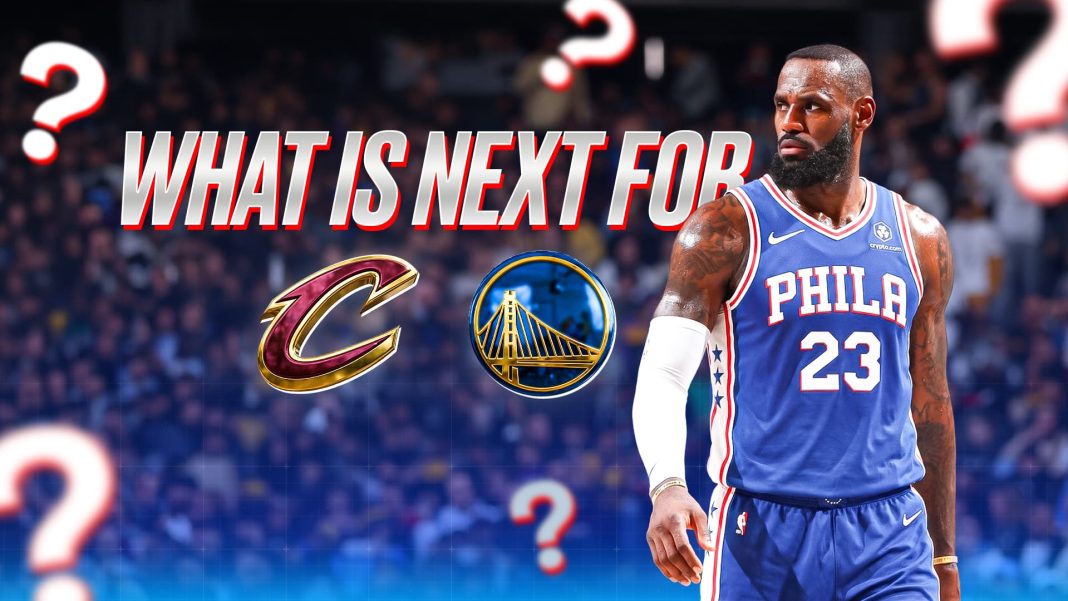

The LeBron James sweepstakes of 2026 have officially come to an end, as it was revealed over the weekend that he was joining the Philadelphia 76ers on a two-year deal.
The move came as a major shock to most NBA fans, since many were convinced he would either return to the Cleveland Cavaliers for a swan song or link up with Steph Curry and the Golden State Warriors in a legendary pairing.
His decision to join the Sixers makes them an outright favorite to win the NBA title. With a starting five of LeBron, Tyrese Maxey, rookie standout VJ Edgecombe, MVP Joel Embiid, and recently acquired Jaylen Brown, Philadelphia now has an uber-talented core.
But where does that leave the Cavaliers and the Warriors?
Cleveland Left With Few Options
Cleveland finds itself stuck between a rock and a hard place, since the free agency market is practically dried up and the team made no moves aside from re-signing Thomas Bryant and exercising its team option on Craig Porter Jr.
The Cavaliers have already lost Dean Wade to Philly, Larry Nance Jr. to Indiana, and Keon Ellis to Brooklyn. Additionally, James Harden opted out of his current deal and is expected to return on a new guaranteed two-year contract.
The Cavs reached the Eastern Conference Finals last season but were handily swept by the eventual champions, the New York Knicks. LeBron returning to Cleveland would have breathed new life into their title hopes, but they now have to run things back with a limited budget.
Golden State Faces a Similar Problem
Meanwhile, the Warriors find themselves in a similar boat.
Al Horford, Kristaps Porzingis, De’Anthony Melton, and, most recently, Draymond Green all opted to return. Green only re-signed following the Warriors’ failed pursuit of the NBA’s all-time leading scorer.
Golden State lost Quinten Post to the Memphis Grizzlies and Pat Spencer to the Phoenix Suns, both of whom were integral parts of the team last season.
When healthy, that core remains capable of competing for a play-in spot in the upcoming season, but probably not much further than that—essentially the same outcome as their 2025–26 campaign.
There are still a couple of options available on the open market, but with the second-least amount of cap space in the league, the Warriors are extremely limited in what they can do. The Cleveland Cavaliers fare no better, as they have the fourth-least amount of cap space.
The 2026–27 NBA season is only about two months away, and with so much uncertainty surrounding the immediate future of these two franchises, the Cavs and Warriors need to move quickly if they are to put together a memorable season.