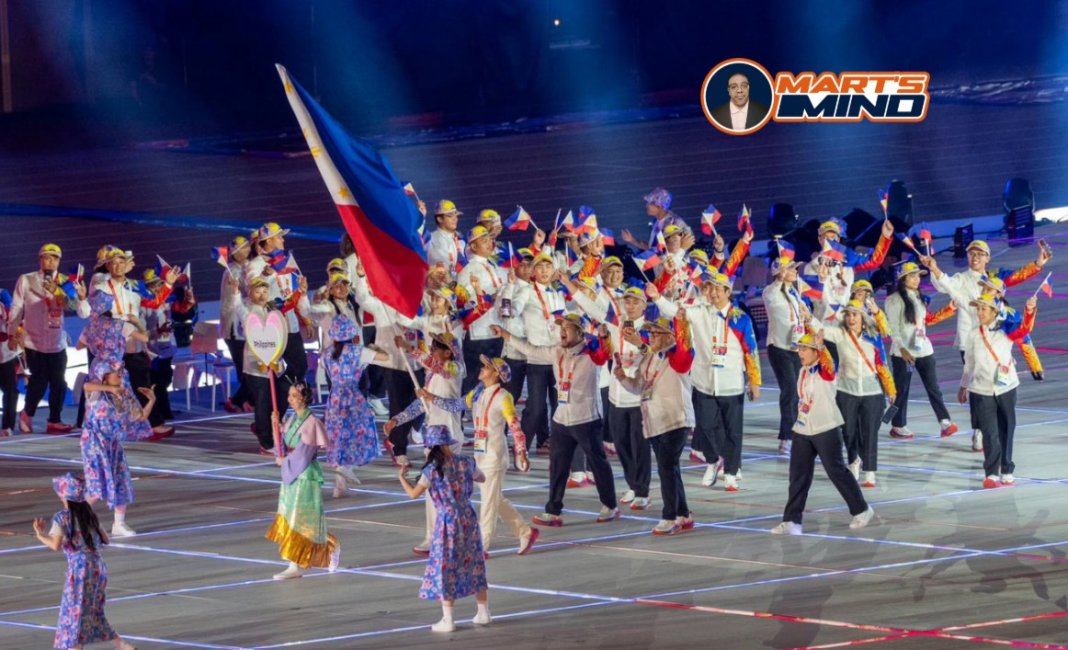


The Philippine Olympic Committee (POC) and Philippine Sports Commission (PSC) set a lofty goal for Team Philippines ahead of the 20th Asian Games: Win eight gold medals.
With the Aichi‑Nagoya Games closing later today, that obviously won’t be happening. But, overall, Team Philippines had for themselves a remarkable campaign, coming away with 4 gold, 9 silver, and 16 bronze medals for a grand total of 29. That haul is good enough for 17th place among 40 participating nations and fifth among all Southeast Asian countries.
For the Philippines, specifically, the 29 medals it won in Japan are the most since the country won 26 in the 2002 Busan Games. More broadly, Team Philippines’ performance in the 20th Asian Games is its best when accounting for gold medals won since the 1962 Jakarta Games, when the country copped 7 gold, 6 silver, and 24 bronze medals.
Near-Golden Finishes for Team Philippines
While it’s true Team Philippines missed out on the eight‑gold target set by the POC and PSC, its performance overall leaves reason to be encouraged and optimistic for the future. Truth be told, that four‑gold haul could’ve ended up at nine after the Philippines’ late surge.
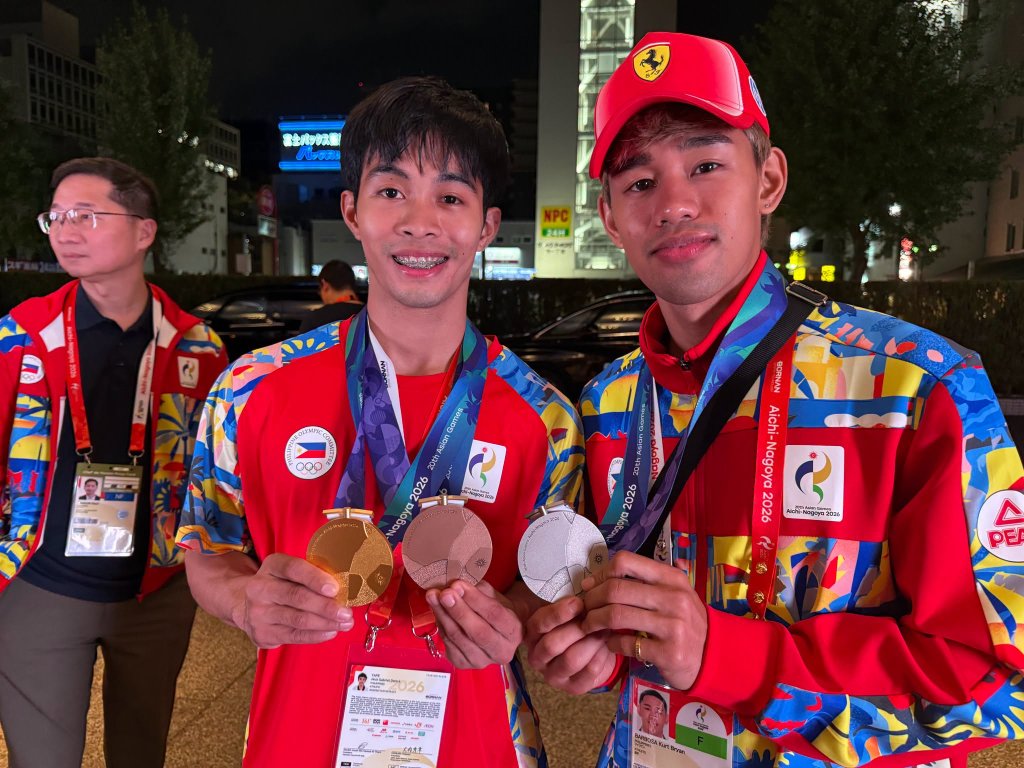
On Friday, four Filipinos competed in the finals of their respective sports—Jeus Yape in mixed individual virtual taekwondo, Carlo Paalam in the 55kg category in men’s boxing, Kurt Barbosa in the ‑58kg division in men’s taekwondo, and Tachiana Mangin in the ‑49kg category in women’s taekwondo.
Yape finished the job and won Team Philippines’ fourth gold of the 20th Asian Games. Unfortunately, Paalam, Barbosa, and Mangin couldn’t do the same as each lost in the finals in heartbreaking fashion. Paalam, in particular, was thisclose to winning gold and breaking the country’s 16‑year golden drought in boxing.
A day earlier, on Thursday, Amaya Cojuangco made a most improbable run to the gold‑medal match of the women’s individual compound event in archery. Along the way, she beat South Korean title favorite Park Jungyoon and second‑seeded Iranian Bita Asheghzadeh Oskouei. But, in the final, Cojuangco fell just short—tantalizingly short, that is—as she lost to Indonesia’s Dian Ashrifah, 144‑143.
Finally, on Saturday, the penultimate day of the 20th Asian Games, jiu‑jitsuka Alex Enriquez made it to the gold‑medal match of the women’s ‑63 kilogram jiu‑jitsu competition against Thailand’s Orapa Senatham. Neither Enriquez nor Senatham scored a point in the match, but the Thai athlete won gold by virtue of one advantage ruled in her favor at the 2:44 mark.
Those were five gold medals within reach for Team Philippines. But fate just didn’t side with Paalam, Cojuangco, Barbosa, and Mangin.
Still a Great Showing Overall for Team Philippines
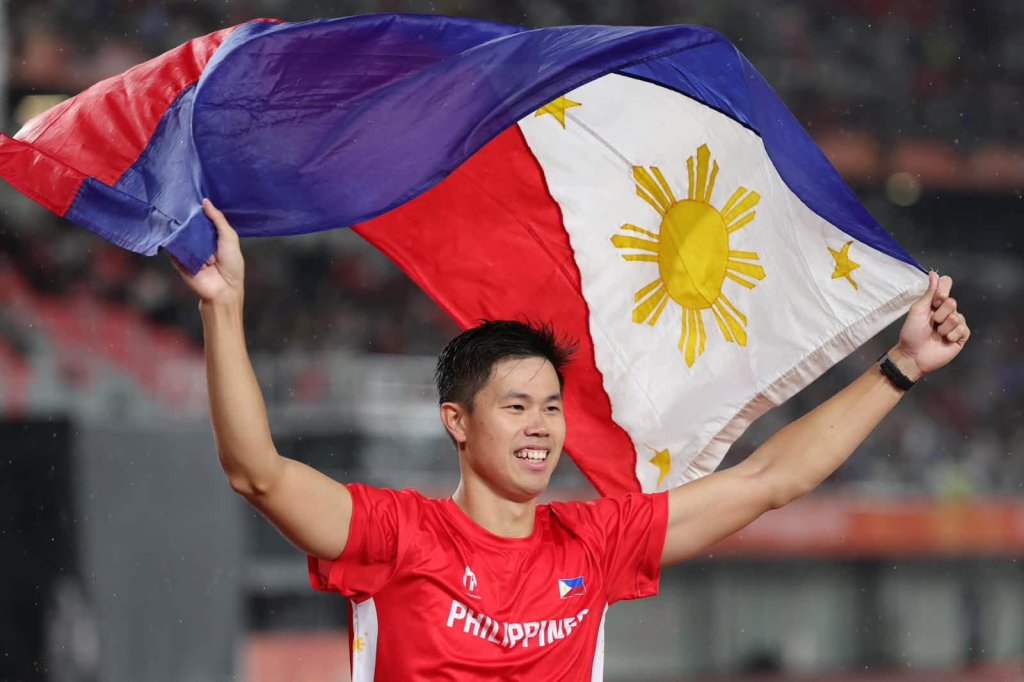
Even with those three heartbreaking losses, the Filipino athletes who competed in Aichi‑Nagoya certainly showed out. Yape, Carlos Yulo, EJ Obiena led the way as Team Philippines’ gold‑medal winners, with Paalam, Cojuangco, Enriquez, Barbosa, and Mangin winning silver medals worth their weight in gold.
Jean Claude Saclag introduced Filipino MMA to Asia with a silver early in the competitions. Gilas Pilipinas Women bagged silver in 3×3 hoops. Abegail Sinogbuhan, Jean Marie Sucalit, and Nelly Jay Salon copped an improbable silver in sepa takraw. Juliana Mykhail Candelaria added to the silverware.
Even the bronze medals leave reason to be optimistic for the future. Young stars John Cabang Tolentino and Victoria Bossong nabbed bronze in the 110m hurdles and 800m, respectively, giving athletics its best medal haul—three with Obiena’s gold—since 1986. The prodigious Albert Ian Delos Santos won bronze in a competition where he was a boy among men, while Alex Eala just fell short of a gold‑medal stint. Eldrew Yulo, Carlos’ younger brother who’s only 18, added a bronze in horizontal bars.
Overall, Team Philippines won medals in 16 sporting categories, including gymnastics (3 medals), taekwondo (5), jiu‑jitsu (2), and mixed martial arts (2). In contrast, the Philippines won medals in just 11 disciplines in the Hangzhou Games in 2023. That difference isn’t lost on PSC chair Patrick Gregorio.
“We’re very happy we won so many medals in so many sports. In China (2023 Hangzhou Asian Games), we won in 11 sports. ‘Yan po ang malaking pagbabago, at ‘yan po ang importante sa ating development ng Philippine sports, sa ating grassroots program,” Gregorio said.
What This All Means and What Must Be Done
The 29‑medal haul, despite falling short of the eight‑gold target, underscores a deeper shift in Philippine sports: breadth and competitiveness across more disciplines. Near‑misses in boxing, taekwondo, archery, and jiu‑jitsu show that the country is not just scraping for podium finishes but consistently producing finalists capable of challenging Asia’s best. That consistency is reason for optimism—it signals that the Philippines is building a foundation for future breakthroughs rather than relying on isolated stars.
To sustain and elevate this momentum, sports officials must double down on two fronts. First, strengthen grassroots programs to ensure a steady pipeline of talent, particularly in athletics, combat sports, and emerging disciplines where Filipinos are already competitive. Second, invest in high‑performance support—world‑class coaching, sports science, and international exposure—to convert silver and bronze into gold. The heartbreak of near‑gold finishes should be treated not as failure but as proof that the gap is narrow and surmountable.
If the POC and PSC can align resources with long‑term athlete development, the Philippines will not only meet future medal targets but also establish itself as a consistent force in Asian competition. The 2026 campaign, while bittersweet, is a clear step forward.