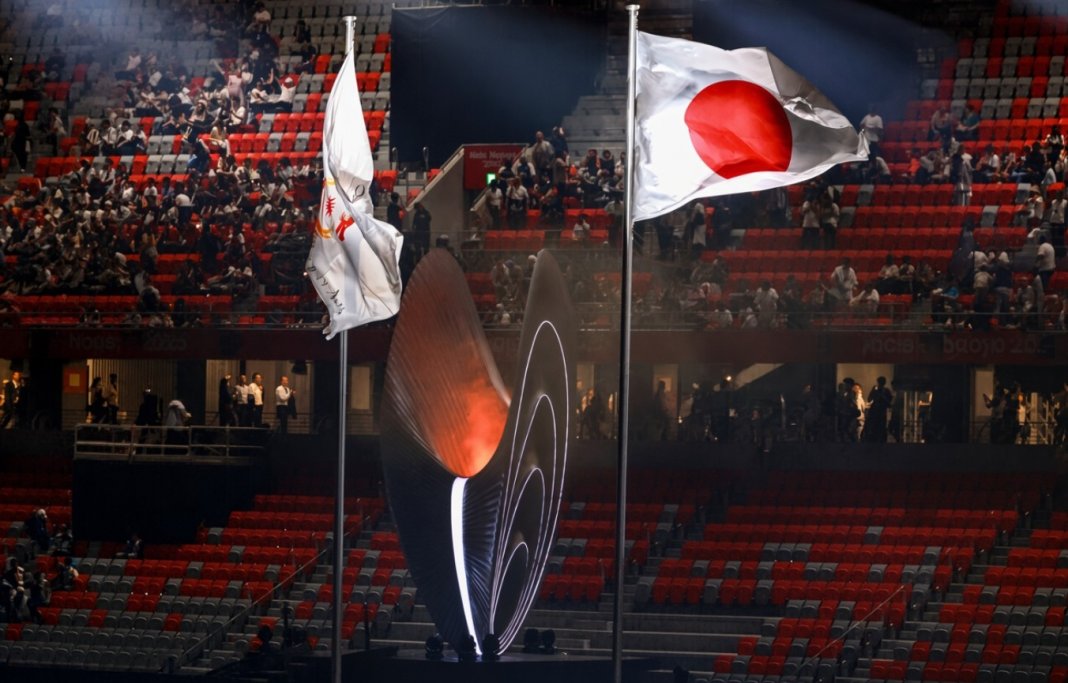


Japan built its reputation on being the country major sporting events could trust with the keys. The Aichi-Nagoya Asian Games just put a serious dent in that reputation, and experts say the damage might follow Japan straight into its next Olympic bid.
The list of mishaps reads less like a highlight reel and more like a blooper tape. Athletes got bussed to the wrong venues. The North Korean national anthem played during a field hockey match involving South Korea and Bangladesh. Teams found themselves stranded at the airport for up to six hours on arrival. And with more than 17,000 athletes and officials on hand, a figure that actually outnumbered the Olympics, organizers simply didn’t have enough beds to go around.
Countries didn’t hold back their frustration. Ryu Seung-min, president of the Korean Sport and Olympic Committee, didn’t mince words. “If I were to give them a grade, it would be an F,” he said. A Thai official went further still, describing the organization as “chaotic” and likening the whole experience to “musical chairs.”
Japanese Olympic Committee president Seiko Hashimoto acknowledged the failures publicly, admitting “there were many problems,” while still insisting the country wants to host more international events going forward.
A Reputation Already on Shaky Ground
Hirokazu Arai, a professor specializing in sports psychology, told AFP that Japan may struggle to shake the shadow of these Games for some time. “If Japan were to bid for the Olympics again, trust in Japan may have fallen and it might be harder to win a bid,” he said. He added a second concern closer to home: “And within Japan, people may take the view that if these kinds of things are going to happen, we don’t need the Olympics.”
That skepticism isn’t coming from nowhere. Japan is still working through the fallout of the graft-stained, pandemic-delayed Tokyo Olympics, a Games marked by cost overruns, corruption, and a largely behind-closed-doors event held a year later than planned in 2021. Japan officially spent $13 billion on Tokyo, though a government report suggested the real figure could be double that. The country has since shelved its bid to host the Winter Olympics in Sapporo, citing a lack of public support, though Hashimoto, who also led the Tokyo Olympics organizing committee, has said that bid could still be revived.
Despite everything, Hashimoto struck an oddly optimistic note about Aichi-Nagoya. “We also received harsh criticism because of the challenges we faced—I am fully aware of that,” she said. “This is all part of the Games, but we need to analyse those issues so we can tackle them for the next future opportunity.” She went as far as to say the Games had “reaffirmed my belief in the value of hosting international sporting events in our country.”
Budget Promises That Didn’t Hold
Nagoya won the right to host these Games back in 2016, well before COVID-19 or the Tokyo Olympics delay entered the picture. The original budget, announced that year, sat at roughly $650 million. By late 2025, that figure had swollen to about $2.5 billion, nearly four times the original estimate.
Organizers also opted against a traditional athletes’ village this time, aiming for what they called a “sustainable” Games. Instead, participants were split across a cruise ship, hotel rooms, and temporary wooden huts, with several teams complaining the wooden units were cramped and the beds too short. The transportation system took its own hits too, stretched thin by venues scattered across central Japan, with swimming held in Tokyo and some football matches staged in Osaka.
The athlete and official count only made matters worse. Organizers had planned for roughly 15,000 participants, but late registrations pushed the final number to around 17,000. To fit in a half-dozen additional sports added to the program, organizers started basketball competition on September 10, a full nine days before the official opening ceremony—compared to the two or three days of early action the Olympics typically allows.
Hideaki Omura, governor of Aichi prefecture and head of the organizing committee, apologized directly for some of the failures. “We had some delays of buses and we’d like to apologize for that,” he said Sunday, describing the Games as having faced “huge challenges.” As is typical at large events, the loudest complaints did ease somewhat once competition got underway.
Notably, Dentsu, the Japanese advertising giant convicted of bid-rigging tied to the Tokyo Olympics, was barred from bidding on contracts for these Games, despite its deep experience running major sporting events and securing sponsors.
The OCA’s Defense
Organizers and the Olympic Council of Asia pushed back against the wave of criticism. Husain Al Musallam, the OCA’s director general, defended the collaborative effort behind the Games. “Yes, the organizing committee had challenges,” he said. “But our duty and responsibility as leaders was to work hard with the organizing committee, to help Japan demonstrate to the world that Japan can deliver.”
Whether that message lands is another matter entirely. Arai warned that the public anger which had faded in the years since Tokyo could easily resurface now, right as Japan’s sporting leadership works to bring the Olympics back to the country. “The people at the top of Japan’s sporting world are moving towards trying to bring the Olympics here again,” he said—a goal that now looks considerably harder to reach than it did before the Aichi-Nagoya cauldron was ever lit.