

The PBA is making its most concrete commitment yet to the national team program—and it starts with how the game is called.
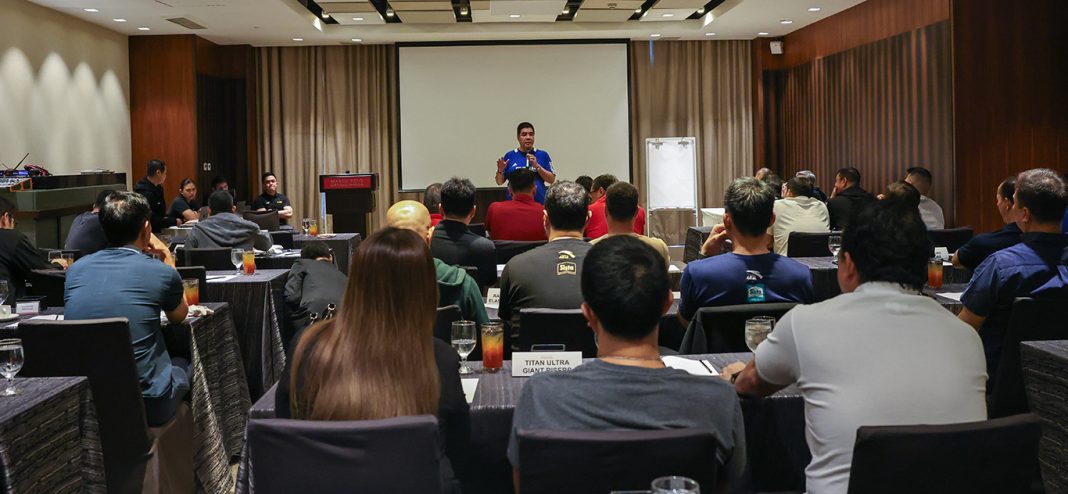
Commissioner Willie Marcial announced Monday during a coaches’ meeting that the league will begin integrating FIBA officiating standards starting in the Governors’ Cup, a deliberate move to align the domestic game more closely with the international rules that Gilas Pilipinas plays under. The announcement followed discussions by the PBA Board and carries the full weight of institutional support behind it.
What Will the PBA Change?
The changes are primarily about officiating—how fouls are called, how screens are set, how physicality is judged—and they reflect a gap that has long frustrated both players and coaches whenever Gilas transitions from the PBA to FIBA competition.
“Magbabago tayo next conference ng tawagan,” Marcial said. “Much close to FIBA officiating.”
Gilas Pilipinas program director and team manager Alfrancis Chua put the problem plainly. Every international window has required PBA players to recalibrate on the fly—adjusting mid-game to a set of standards that can feel drastically different from what they experience week in and week out in the domestic league.
“Yung adjustment kasi talagang malayo. Every time we play internationally, iba yung fouls dito and iba yung fouls doon,” Chua said. “We’re just adjusting middle of the game na. Minsan sobrang physical sila, minsan naman mahipan mo lang, foul na. So we need to adapt. We’re just thinking to at least help the players who are playing for Gilas.”
The adoption of possession arrows in lieu of jump balls is also part of the changes, bringing the PBA further in line with standard international practice.
What the PBA Won’t Be Changing
What is not changing is equally significant. The PBA will retain its six personal fouls per player, four 12-minute quarters, the length of timeouts, and—critically—the four-point line, which remains one of the league’s most distinctive features and a commercial asset it has no intention of giving up.
The adjustments are measured, then—an integration rather than an overhaul, designed to close the gap between the two sets of standards without uprooting the identity of the domestic product.
It is a sensible approach. The biggest friction between PBA and FIBA basketball has never been about quarter length or foul limits—it has always been about how contact is adjudicated, how screens are officiated, and how much physicality is tolerated before a whistle is blown. Addressing that specific gap directly, without dismantling everything else, is the practical way to help players make the transition.
“Like we said before, the PBA will and always support the program of Gilas under the Samahang Basketbol ng Pilipinas,” Marcial said.
Asia’s first professional basketball league has been behind the national team program since FIBA opened the game to professionals in 1989. The Governors’ Cup rules integration is the latest chapter in that commitment—and arguably the most substantive structural step the PBA has taken to bridge the gap between its game and the international stage.
The league tips off the Governors’ Cup with new rules. Gilas tips off its next FIBA window in July.