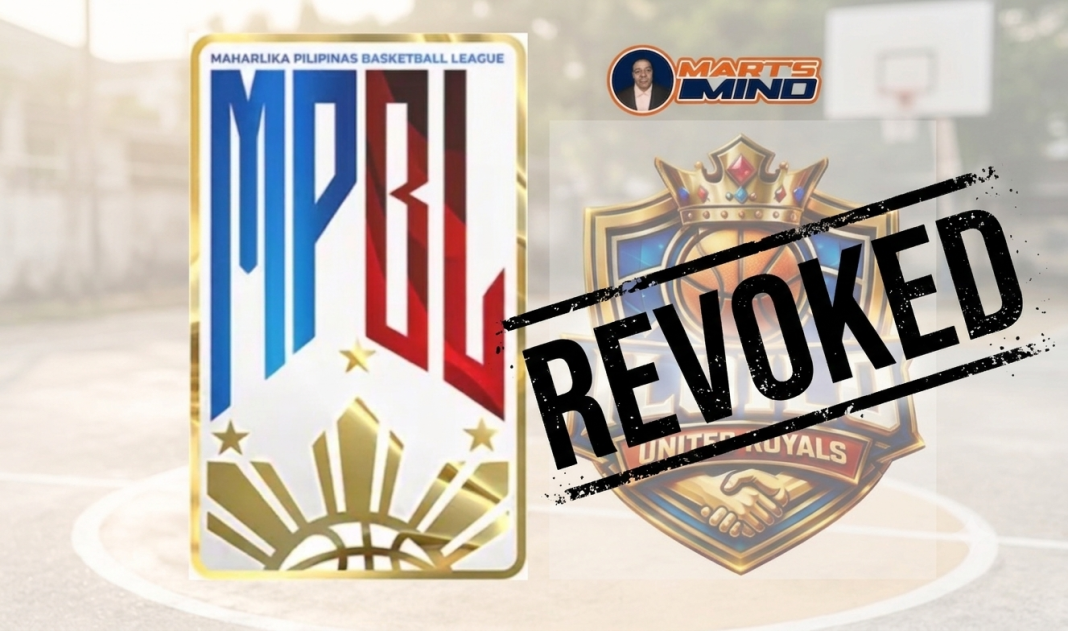


The MPBL revoked the Iloilo United Royals’ franchise on Wednesday—and that was the right call. But it is also a symptom of a problem the league needs to confront honestly if it ever wants to be taken seriously.
What Happened and How We Got Here
The Iloilo United Royals forfeited their game against the Negros Muscovados on June 17 at One Arena Cainta, then went silent on their scheduled game against the Pasig Voyagers on June 24. That was enough for the league to act. The MPBL revoked the franchise, permanently banned the management and officers of the United Royals, and voided all of the team’s games from the 2026 season. Iloilo’s 2-11 record—now erased—was the least of their problems.
The league also announced it may open an investigation into potential game manipulation. Sports integrity firm Sportradar, which the MPBL uses as a third-party integrity partner, flagged concerns, and the league’s Technical Committee passed the matter to the Games and Amusements Board for possible action against the franchise’s owners, managers, coaches, staff, and players.
Commissioner Emmer Oreta said the league remains committed to protecting integrity and the interests of its stakeholders.
Commissioner, integrity starts before the crisis. Here is the thing about that.
A League That Keeps Missing Its Moment
The MPBL has genuine potential. It serves a real purpose—a developmental league outside the PBA that gives local basketball players a professional platform while sustaining regional fanbases that the PBA’s Metro Manila-heavy structure cannot fully serve. The idea of Iloilo, Negros, Davao, Batangas, and a dozen other cities fielding professional basketball teams is a good one. Philippine basketball is deep enough to sustain it. The appetite for hoops is there.
But the MPBL has been undermined repeatedly by the very problems that should be easiest to solve—franchise management failures, officiating controversies, and now the shadow of game-fixing. These are not problems of talent or product quality. They are problems of governance, standards, and accountability. And they keep surfacing.
Revoking the Iloilo franchise was the right call because it sends a message that abandonment has consequences. But the more damaging question is how a franchise in this condition was allowed to participate in the 2026 season in the first place. A team that goes 2-11 before abandoning the league entirely did not collapse overnight. The warning signs had to be there. Did the league see them? If it did, why wasn’t action taken sooner? If it didn’t, what does that say about the league’s oversight mechanisms?
Game-Fixing Is Not a Minor Footnote
The Sportradar flag and the potential game manipulation investigation deserve as much action. Game-fixing is an existential threat to any professional sports league. It is the one thing that cannot be managed—only eliminated. When fans suspect that what they are watching is not real competition, the product becomes worthless overnight. Sponsors pull out. Broadcasters lose interest. Players who are competing honestly become collateral damage.
The MPBL’s relationship with Sportradar, a company that uses its Universal Fraud Detection System (UFDS) to track real-time global betting markets and flag anomalous betting trends, is a positive sign. It means the league at least has the infrastructure to detect suspicious activity. But detection is only half the equation. The response to what Sportradar finds, the transparency with which the league communicates what happened and what it is doing about it, and the severity of sanctions imposed on those responsible are the things that will determine whether the league’s integrity program has any real teeth.
What the MPBL Needs to Do
The MPBL cannot continue to grow as a product while systemic problems keep surfacing at this level. It needs stricter franchise requirements and a genuine vetting process before teams are admitted—financial capacity checks, governance standards, and clear exit protocols for franchises that fall short. It needs officiating standards that match the league’s ambitions, because bad officiating corrodes trust faster than almost anything else.
Equally important, the MPBL needs to treat any investigation into game-fixing with the seriousness it deserves—meaning, with full transparency, meaningful and fair sanctions, and true public accountability. It also must work on officiating, with the end goal of improving it to reach world-class standards.
These are genuine steps to building integrity and winning public trust. These are pathways to build a league that truly resonates in a hoops-crazy country like the Philippines. These are building blocks to improving a product oozing with so much potential.
The Final Word
As the MPBL plots its next moves, it must remember this reality: The Filipino basketball market is large enough and passionate enough to support a legitimate developmental league at the national level. The MPBL has the geography, the player pool, and the regional fanbases to build something real. What it keeps lacking is the institutional discipline to turn that potential into a consistently credible product.
Revoking Iloilo’s franchise removed a bad actor from the league. That is the easy part. Building a league that bad actors cannot enter in the first place—that is the work that still needs to be done.