

The NBA wants its referees to start calling push-offs, and it’s handed them a framework with a catchy name to do it: the Four F’s.
James Jones, the league’s executive vice president of basketball operations, announced on a conference call Tuesday that officials have received new guidance on four categories of “high-volume and highly impactful” calls, with push-offs topping the list. The goal, according to Jones, is making sure the way the game is played and presented continues to track favorably for both players and fans.
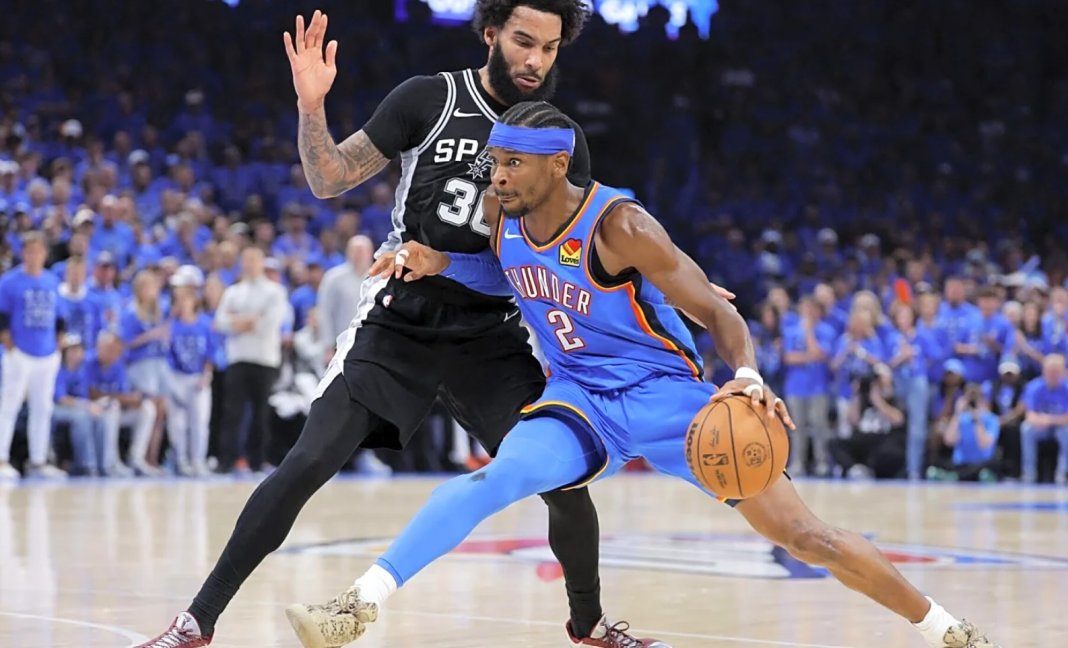
A push-off typically happens when an offensive player uses his non-dribbling arm against a defender to carve out space for a perimeter shot. Some jockeying between the two sides is legal and expected, but referees now have a specific standard to lean on: feeling, firming, force, and full extension. Ball handlers are allowed to “feel” an opponent or “firm up” by gathering themselves in front of a defender. The moment that off-arm contact becomes forceful, or the arm fully extends to create an advantage, it’s an offensive foul.
“We’ve got to make sure the defensive side of the ball does not get penalized by allowing illegal acts by the offensive player,” said Monty McCutchen, the NBA’s senior vice president of referee development and training. “I think we can do a better job.”
The timing isn’t a coincidence. This crackdown on push-offs lands in the middle of an ongoing scoring explosion, with NBA teams averaging 115.6 points last season, the highest mark since 1969-70. It also continues a pattern the league has leaned into in recent years, having already cracked down on offensive players stopping short to draw collisions, splaying their legs mid-shot, and jumping sideways into defenders to bait free throws.
Even Michael Jordan Is a Talking Point
The league didn’t shy away from measuring its new standard on push-offs against history, and that history includes one of the most famous shots ever taken. Michael Jordan’s push-off against the Utah Jazz’s Bryon Russell in the closing seconds of Game 6 of the 1998 NBA Finals set up the midrange jumper that won the Bulls their sixth title of the decade, with no foul called at the time. Under the new Four F’s framework, the NBA says that shot still wouldn’t draw a whistle, since Jordan never made noticeably forceful contact with Russell and never fully extended his left arm.
The league released video Tuesday showing plays it would now flag as push-offs or offensive fouls. One clip showed Philadelphia 76ers guard Jaylen Brown raising his right forearm into Kelly Oubre Jr.’s chest to create space for a jumper near the free-throw line. Another, involving the Toronto Raptors’ RJ Barrett and the Cleveland Cavaliers’ Evan Mobley, showed Barrett using his arm to create separation while driving—forceful enough, per the league, to cause Mobley to stumble backward near the basket, and therefore a foul under the new guidelines. The examples made clear the crackdown isn’t limited to perimeter jumpers; it applies just as much to drives through the paint.
McCutchen conceded the hardest part of all this will be drawing the line between “firm” and “forceful” in real time. “There’s going to be some contact that you would consider ‘firming up’ and I would consider ‘with force’ and illegal,” he said, adding that officials will meet more frequently with the league’s competition committee early in the season to sharpen judgment on plays sitting right on that boundary.
More Than Just Push-Offs
Push-offs aren’t the only point of emphasis this season. Referees have also been told to watch more closely for illegal contact by screeners, like shoving, as well as illegal contact from defenders trying to impede movement off the ball, such as grabbing and holding.
The league also flagged what it’s calling “straight-line pathway plays,” situations where offensive and defensive players are both moving directly toward the basket. Both sides retain the right to stay on a direct path to the rim, and both now risk a foul call if they deliberately veer off that path just to bump the other player away from it.