
Silver is a strange color. It means you were great. It also means you were one match, one point, one kick away from being greater. Team Philippines should know.
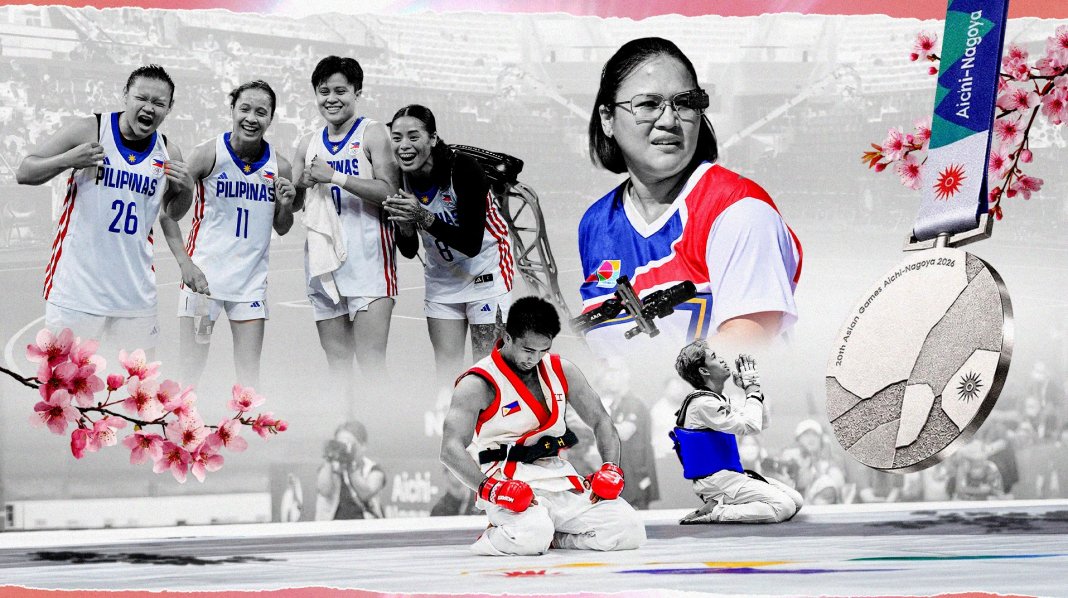
The Philippines finished the 20th Asian Games in Aichi-Nagoya with four gold, nine silver, and 16 bronze medals, its biggest haul in more than six decades. The silvers were special. Philippine Sports Commission chairman Patrick Gregorio singled out the nine second-placers because “they did their best and it hurt the most.” Archery, mixed martial arts, sepak takraw, and 3×3 women’s basketball all delivered their first-ever Asian Games silvers.
In this installment of our series on Team Philippines’ medal winners in the Asian Games, we shine the spotlight on all of them:
Jean Claude Saclag (MMA, 65 kg Category)
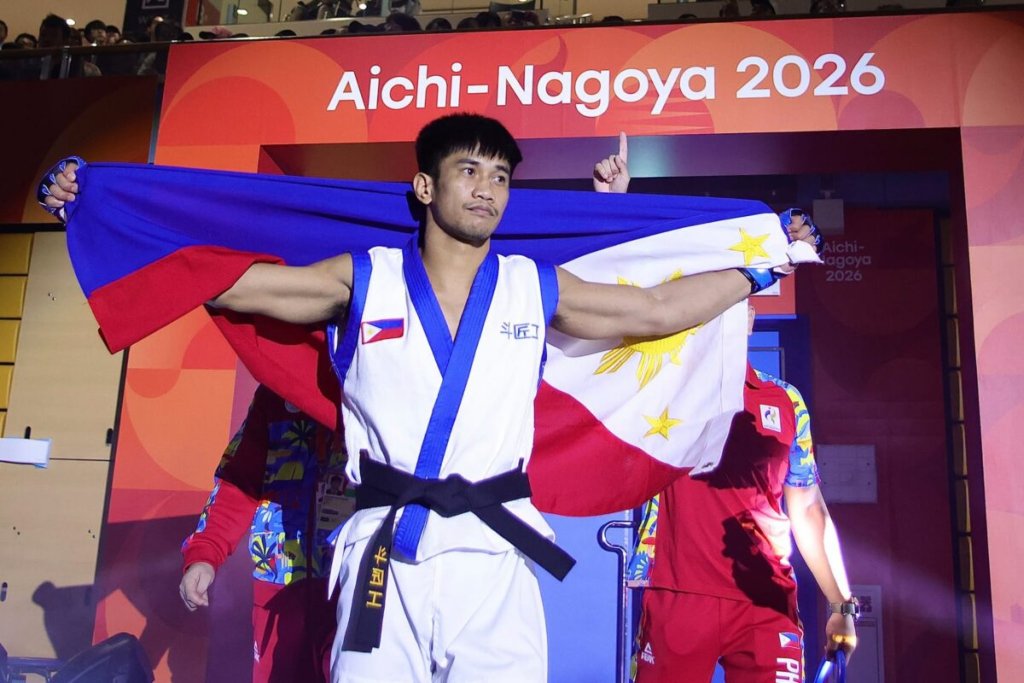
Combat sports fans know all too well the name of Jean Claude Saclag, and he delivered one of the finest individual performances from a Filipino at the 2026 Asian Games. A lifelong martial artist, the 32-year-old looked to add an Asian Games gold medal to his trophy case that features three kickboxing gold medals at the Southeast Asian Games and one each of gold, silver, and bronze in international wushu competitions.
Competing in the men’s traditional 65 kg MMA division, Saclag had to overcome former longtime Team Lakay training partner and Japanese national Daisuke Murayama, which he did. The ONE Championship athlete seemed poised for the gold when he dropped Tajikistan bet Otabek Rajabov early in their matchup. However, Rajabov rode his grappling abilities to slow the pace and come away with the gold. Despite the result, Saclag proved he really did belong in the world of MMA and in Team Philippines.
Amaya Cojuangco (Archery)
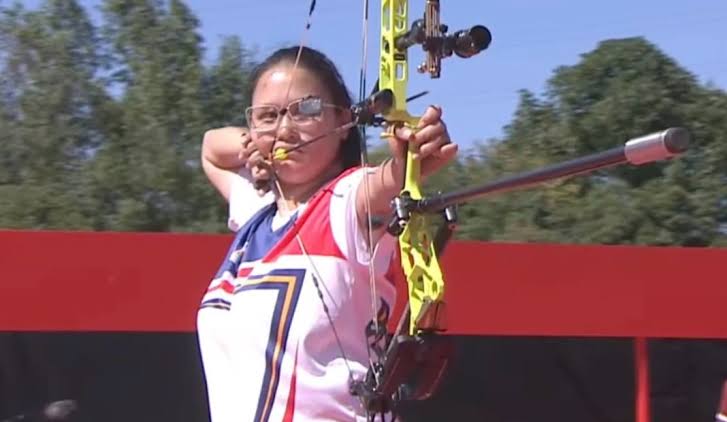
Archery is a sport that Filipinos tend to overlook because it doesn’t have the same prestige as that of our “crown jewel” sports like basketball, MMA, boxing, and volleyball. However, Amaya Amparo Cojuangco, already a local icon, once again proved that this is an event that Filipinos could excel in.
After placing 28th in the women’s individual compound classification round, the four-time Southeast Asian Games gold medalist breezed past Iran in the quarterfinals (146-135), then scored a razor-thin upset over South Korea’s Park Jungyoon in the semifinals (142-141) to book her spot in the gold medal match. Though she ultimately fell short to Indonesia’s Nurisa Dian Ashrifah (139-137), Cojuangco’s nerves of steel ended the country’s 12-year medal drought in the event, while also netting the Philippines’ best-ever finish in the sport at the Asian Games.
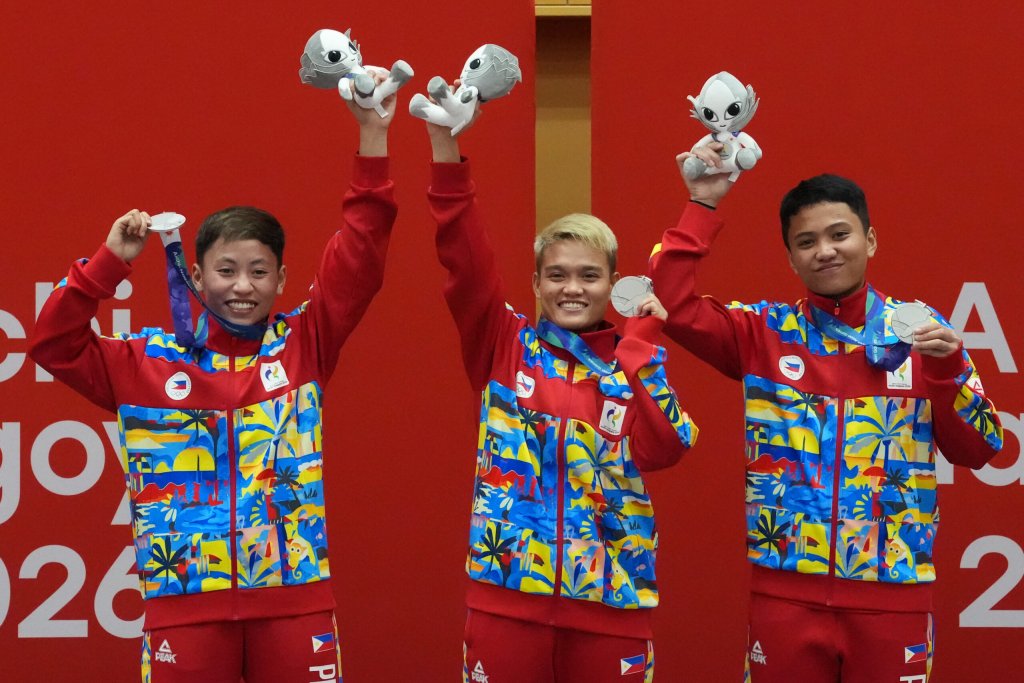
Philippine Women’s Sepak Takraw Doubles Team
Jean Marie Sucalit, Abegail Sinogbuhan, and Nelly Jay Salon came to Japan with a heavy load. They belong to the 21-strong national sepak takraw team that was told to win a medal or step aside. That is a harsh ultimatum for any athlete. The trio answered it the only way possible: by winning a medal for Team Philippines.
The Filipinas swept Laos, 15-12, 15-10, in the semifinals to guarantee at least silver, then met Vietnam for the gold. The Vietnamese won the final, 15-8, 15-4, and it ended a 20-year title drought in the sport for Vietnam. Still, this was history for the Philippines. Sucalit said it was the national women’s team’s first Asian Games medal, and Salon said she had wanted to make history for the women’s side since the men’s team already had.
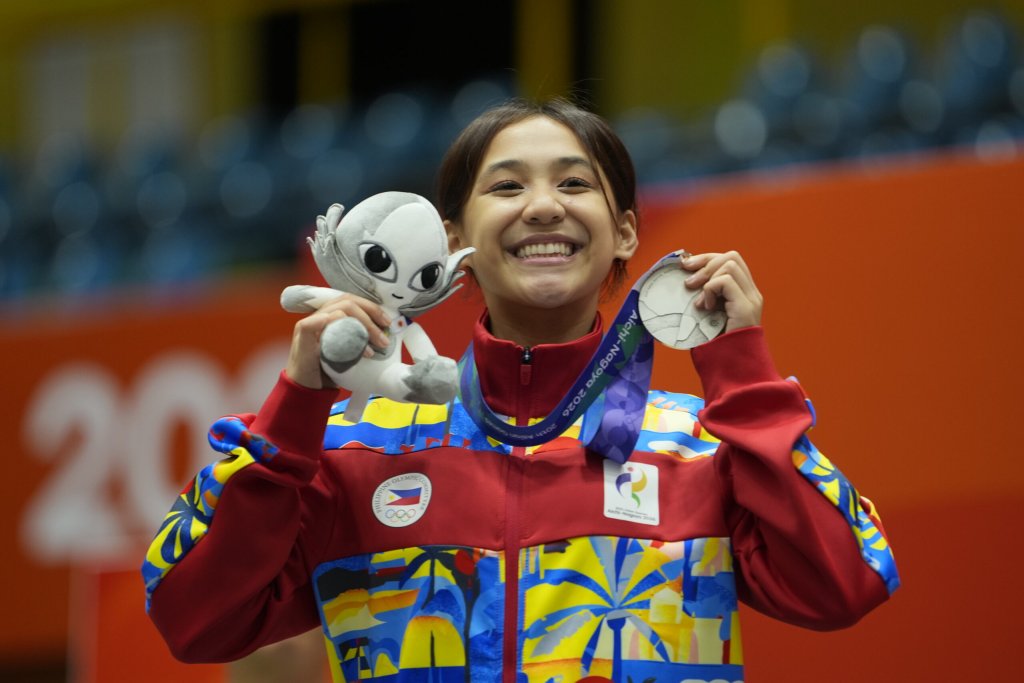
Juliana Candelaria (Taekwondo, Women’s Individual Poomsae)
At 18, Juliana Mykhail Candelaria is already one of the best poomsae practitioners in Asia. She has competed internationally since at least 2023, won bronze in the junior individual event at the 2025 Asian Taekwondo Championships, and added another bronze in the over-17 freestyle individual event at the 2026 edition. The Asian Games was the next step up, and she took it in stride.
Making her Asian Games debut for Team Philippines, Candelaria finished second with an average score of 9.1300, posting 9.200 in her first routine and 9.060 in her second. Only South Korea’s Jung Ha-eun, who scored 9.3100, finished ahead of her, and the Filipina stayed clear of the bronze medalists from Thailand and Japan. “Super thankful for the moment. Super happy with my results,” she said.
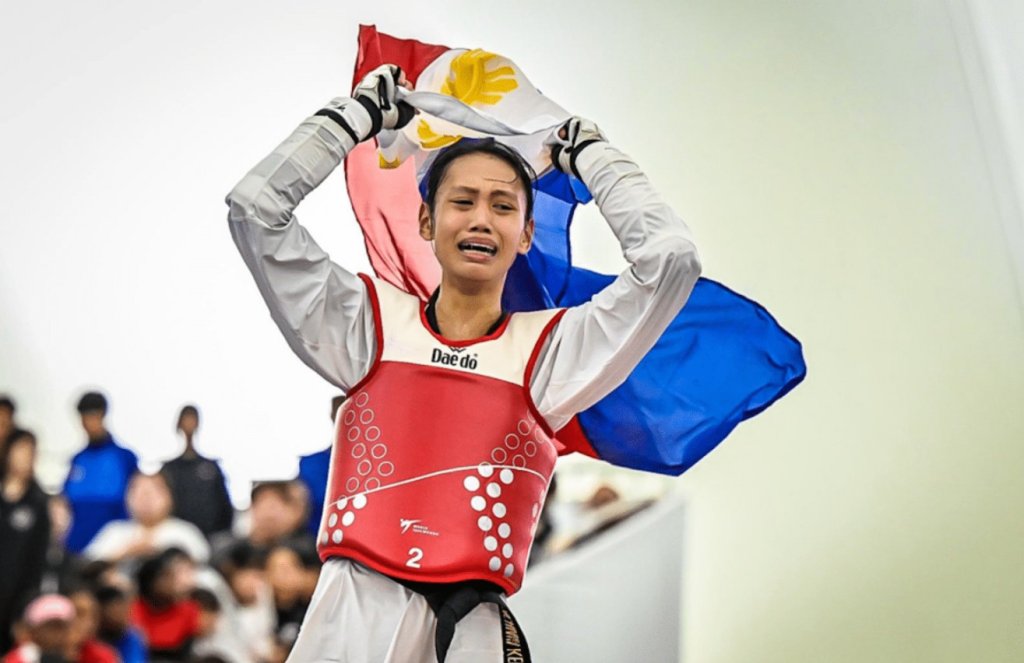
Tachiana Mangin (Taekwondo, Women’s -49 kg Category)
Tachiana Keizha Mangin was a name to remember long before Nagoya. In 2024, she became the first Filipina to win a World Taekwondo Junior Championships gold, taking the -49 kg title and ending a 28-year wait for the country. She followed that up with gold at the 2025 SEA Games, beating Thailand’s Kamonchanok Seeken in the -49 kg final. She is 18.
In her Asian Games debut for Team Philippines, Mangin outlasted three opponents to reach the final, winning each of those bouts, 2-1, over Kazakhstan’s Rita Bakisheva, Chinese Taipei’s Wang Chieh-ling, and Japan’s Ruka Okamoto. Beating the hometown bet in the semis was no small feat. China’s Ma Jingyue then won the final. A silver in your first Asian Games at 18? There is plenty of gold left in that future.
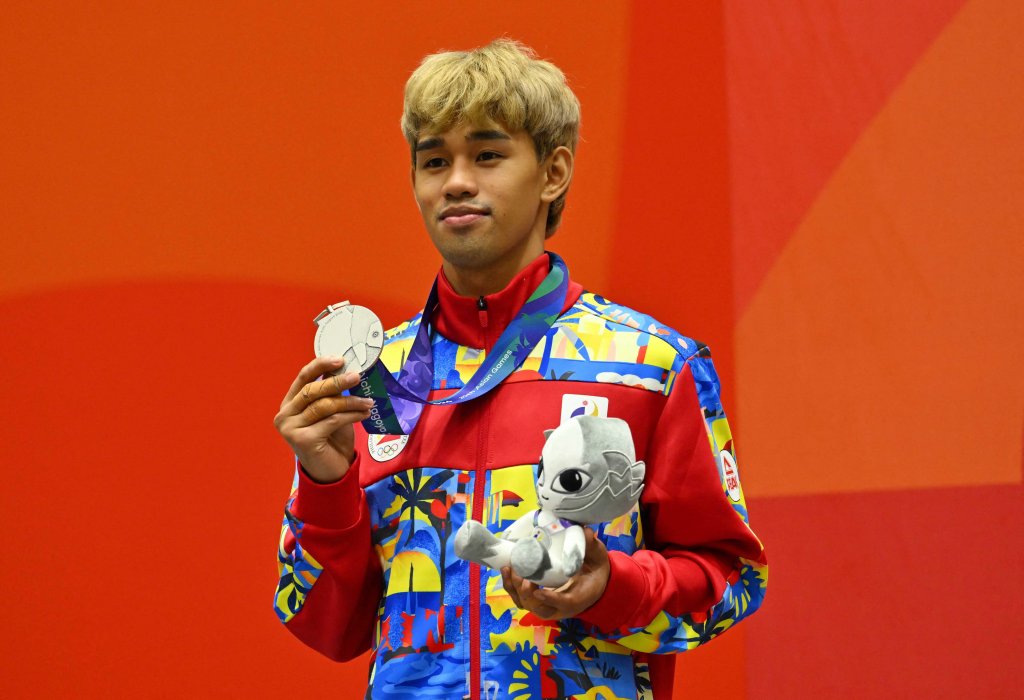
Kurt Barbosa (Taekwondo, Men’s -58 kg Category)
Kurt Barbosa is a veteran of Team Philippines, and he’s earned it. The Tokyo Olympian won SEA Games gold in 2019, 2021, and 2023, and he got serious about the sport at 13, after his mother reprimanded him for playing online games when he was supposed to be training. The road hasn’t always been smooth. He fell short of qualifying for the Paris Olympics when he lost the semifinals of the 2024 Asian qualification tournament.
Nagoya was redemption of a sort. Barbosa beat Saudi Arabia’s Abdullah Essa Almushraf in the Round of 16, Japan’s Hidetaka Maeda in the quarterfinals, and Jordan’s Jafar Aldaoud in the semis. He then fell to Kazakhstan’s Tamirlan Tleules in the final, who pulled away in the second round after a tight opening one. It was a big improvement on his Hangzhou campaign, where he lost in the round of 32.
Alexandria Enriquez (Jiu-Jitsu, Women’s -63 kg Category)
Alexandria “Alex” Enriquez gave Team Philippines its closing sparkle. The 27-year-old Fil-Am Brazilian jiu-jitsu practitioner had already won gold at the Asian Beach Games before heading to Nagoya, where she was one of the country’s top gold hopes after early exits by world champions Annie Ramirez and Kimberly Custodio. Enriquez submitted Palestine’s Dania Obaid, Kazakhstan’s Marian Zhuravleva, and Mongolia’s Narankhishig Baasanjargal to reach the final, where she met an old rival.
The final lasted six minutes and 56 seconds with no points on the board until Thailand’s Orapa Senatham scored one, and the Thai won on advantages for a near-pass or near-sweep. Enriquez had beaten Senatham at the Asian Beach Games, and she admitted the loss was painful because it was so close. Her promise afterward: “It’s not going to be the last time you guys see me.”
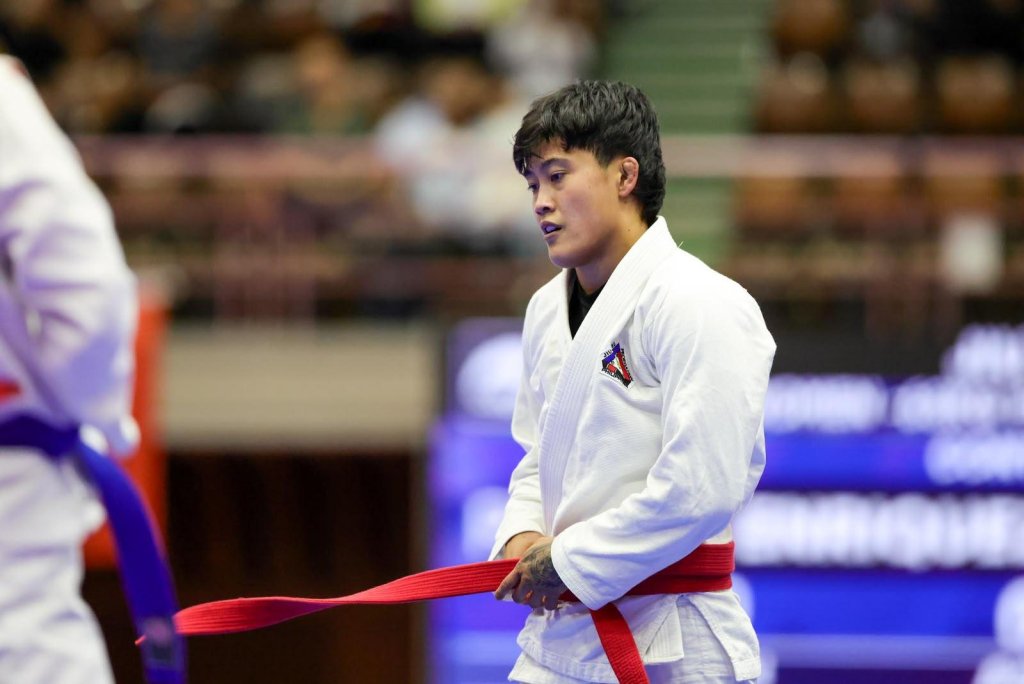
Carlo Paalam (Boxing, 55 kg Category)
Because of the Philippines’ long lineage of world-class professional and amateur boxers, there is always that expectation of competing for a world title at least once in their careers. For amateur standout Carlo Paalam, bringing home a gold medal at the 2026 Asian Games was the ultimate goal. In fact, he was among Team Philippines’ best bets for gold.
The 2020 Tokyo Olympics silver medalist edged out three opponents in the 55 kg category with 3-2 split-decision wins to enter the finals: India’s Jadumani Singh in the Round of 16, China’s Zhang Jiamao in the quarterfinals, and multi time amateur gold medalist Makhmud Sabyrkhan of Kazakhstan in the semifinals. Unfortunately for the 28-year-old, he fell victim to a split-decision defeat at the hands of Japan’s Rui Yamaguchi. While he, understandably, is not happy with the result, one cannot help but root for him in his next outing.
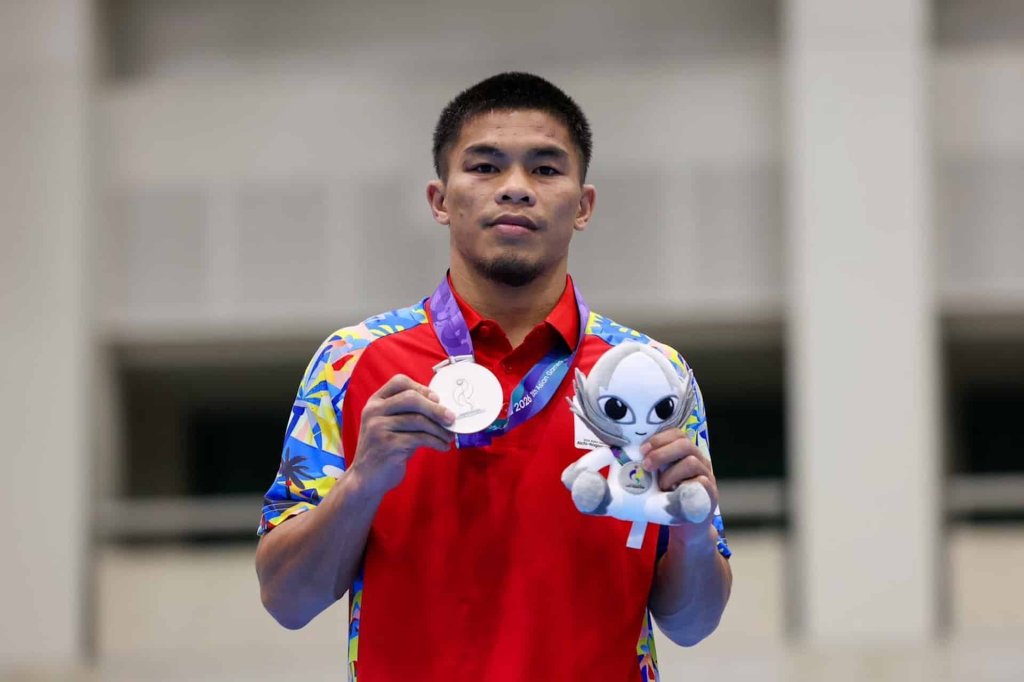
Gilas Pilipinas (3×3 Women’s Basketball)
For the first time ever, the Samahang Basketbol ng Pilipinas sent a women’s 3×3 team to the event. The Gilas Pilipinas 3×3 women’s team consisted of players from the UAAP: Maria Victoria Pasilang and Amyah Espanol of the FEU Lady Tamaraws, Kennan Ka of the UP Fighting Maroons, and Kacey Dela Rosa of the Ateneo Blue Eagles.
Coached by Anton Altamirano, the Gilas Women swept the entire group phase after defeating Mongolia, Malaysia, and Macau, earning the top seed heading into the playoffs. In the quarterfinals, they took care of business by defeating Singapore, 22-12, before outlasting Thailand, 13-8, in the semifinals. However, in the gold medal match, Dela Rosa’s ankle injury, which she sustained at the beginning of the tournament, worsened and became a factor in the team settling for the silver medal against Japan, 11-21.