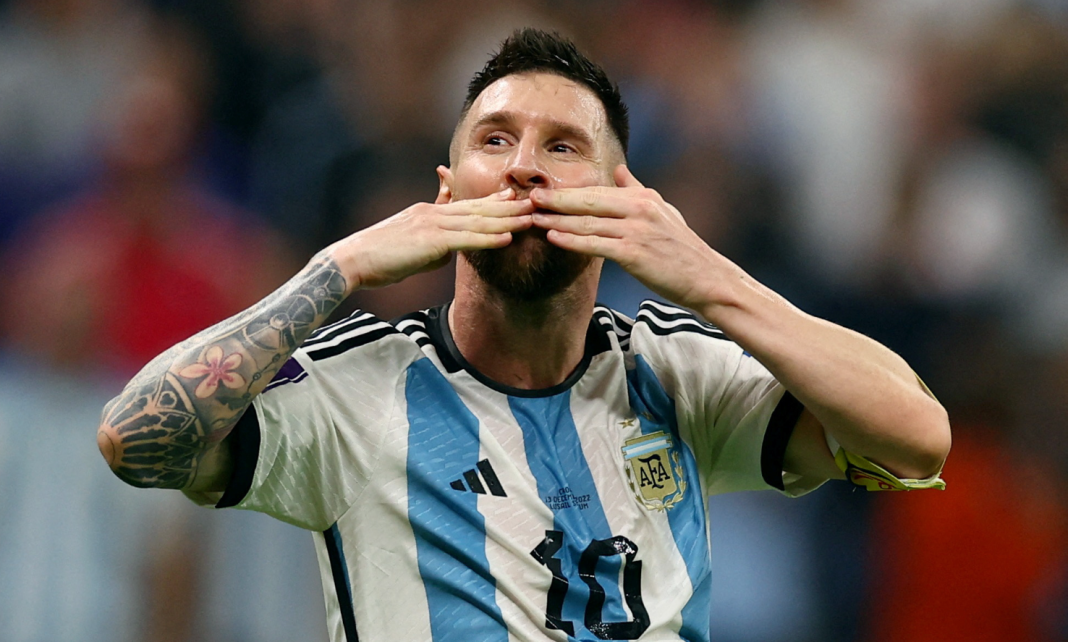

Lionel Messi wrote his goodbye to Argentina back on July 21, two days after losing the 2026 FIFA World Cup final to Spain. He just didn’t post it yet. On Monday, at 39 years old, he finally did. And he attached a footnote to it that made clear exactly why the timing mattered.
“I wrote these words on July 21st, two days after the final,” Messi wrote. “Today, after what happened with my dad, I am even more convinced than before.” His father, Jorge Messi, died on August 8 at a hospital in Rosario. He was 68.
The retirement closes out a Argentina career built across six World Cups, one that delivered the country’s first title in 36 years back in Qatar in 2022 and, this year, carried Argentina all the way back to the final, where it fell to Spain.
A Hurting Messi Steps Away
Messi didn’t try to make the decision sound easy. “It was a decision that hurt—and still hurts deep down—but I understand that the time has come,” he wrote. “I swear to you that I always gave it my all—not just in these last few years when we won everything, but before that too; I always fought and left everything on the field for this jersey, to bring you joy and make you feel proud to be Argentine through football.”
He was equally direct about why now, of all moments, felt right. “Time is running short, chapters come to a close, and this is one that hurts me deeply,” he wrote. “I love, have loved, and will always love being part of the national team. I’ve given everything I had; I have nothing left to give, and besides, there are some great young players coming up who deserve to be here.”
Twenty Years, Closing the Same Way It Started
Messi thanked the fans who followed him for two decades, the family who stood by him through what he called a journey “so beautiful, yet so difficult,” and every coach, teammate, and official who shared the road with him. “I leave with the peace of mind and pride of having given you—alongside my teammates—moments we once only dreamed of,” he wrote, closing with a line that needed no translation of intent: “Thank you, God, for making me Argentine. Let’s go, Argentina!”
The numbers behind that career are almost absurd on their own. Messi leaves as Argentina’s all-time leading scorer and most-capped player, with 125 goals in 207 appearances—the highest scoring total by any man in South American soccer history. Beyond the 2022 World Cup, he played a central role in snapping Argentina’s 28-year trophy drought by winning the 2021 Copa América, then repeating that title in 2024.
This isn’t actually the first time Messi has walked away. He first announced his international retirement back in 2016, after captaining Argentina through three consecutive finals without a title to show for any of them. He reversed that decision before long, and everything that followed—the Copa América doubles, the long-awaited World Cup—happened because he came back.
This time, there will be no coming back.
A Wave of Tributes
The announcement drew an outpouring of reaction almost immediately. Messi’s wife, Antonela Roccuzzo, wrote on Instagram: “I saw you keep going when things didn’t work out and always try again. And after so many years, I was also lucky enough to see you fulfill your dreams and live some of the happiest days of our lives. You deserved this story and so much more. We love you infinitely.”
Argentina president Javier Milei kept his tribute short and pointed: “Thank you very much, impossible man.” FIFA president Gianni Infantino praised Messi for “an extraordinary international career that has inspired millions of people and redefined our sport,” adding that “your magical talent and humility will be remembered forever.”
The Argentine Football Association’s own message was simple and direct: “Thank you for everything, Leo. Thank you for representing Argentina. Thank you for making us dream. Thank you for turning so many dreams into reality. The legend is yours, forever.”
Teammates weighed in too. Rodrigo De Paul pointed to “your unconditional love for our country, your internal battles to never give up, your strength in always enduring injustices, and your leadership and character in your dealings with every player.” Enzo Fernández, who debuted for Argentina just two months before winning the World Cup alongside Messi in 2022, wrote: “Thank you for the way you treated me, for everything you taught me, and for allowing me to share a part of your story. We’re going to miss you so much, captain.”
Messi now steps away from the national team for good, leaving behind a legacy already spoken of in the same breath as Diego Maradona’s—not as a player chasing one more chapter, but as one who has decided, on his own terms this time, that the story is finally complete.